
h kkk TUBERCULOSIS in 2026
The following is the meta-analysis in brief by Global Data Study with particular reference to an article by Dr. T. Rama Prasad and VeSsha Rajeev.
" ... In early 2026, tuberculosis (TB) remains a very serious public health problem in India. The country’s ambitious goal to eliminate TB by the end of 2025 — set under the National Tuberculosis Elimination Programme (NTEP) — has not been achieved. Elimination, in this context, refers to a drastic reduction: an 80% drop in new cases and 90% in deaths compared to 2015 baselines (per India’s NTEP definition), or reaching very low levels like <1 infectious case per million population (per stricter WHO-aligned definitions).
The attached document (an article by Dr. T. Rama Prasad and Versha Rajeev, published in The Antiseptic) provides a realistic, critical assessment written at the close of 2025. It highlights significant progress in diagnostics, treatment coverage, and notification, but emphasizes persistent high burden, drug resistance, socioeconomic factors, and gaps in ground-level implementation. The authors conclude that the 2025 target is unattainable, and elimination may take many more years, potentially requiring major socioeconomic uplift or a breakthrough vaccine.
Key Data from WHO Global Tuberculosis Report 2025 (Released in November 2025)
According to the most authoritative recent source (WHO data covering up to 2024, with estimates and trends relevant into 2025–2026):
- India’s estimated TB incidence rate fell by 21% from 237 per 100,000 population in 2015 to 187 per 100,000 in 2024. → This is nearly double the global average decline (~12%), and India showed one of the strongest improvements worldwide.
- India still accounts for ~25% of the global TB burden — the highest of any country — with roughly 2.6–2.7 million estimated new cases annually in recent years.
- Deaths declined from ~28 per 100,000 in 2015 to ~21 per 100,000 in 2024.
- Treatment coverage improved dramatically: from ~53% in 2015 to over 92% in 2024, with very high success rates (~90%) for drug-susceptible TB.
- “Missing” cases (undiagnosed/unreported) dropped sharply from ~15 lakh in 2015 to under 1 lakh in 2024.
- Drug-resistant TB remains a major concern — India accounts for a large share (~32%) of global multidrug-resistant/rifampicin-resistant (MDR/RR-TB) cases.
Despite these gains, the progress falls far short of the 2025 milestones (50% incidence reduction and 75% mortality reduction from 2015 per WHO’s End TB Strategy). India did not achieve the stricter national goal of “elimination” by 2025.
Notified Cases in Recent Years (from Ni-kshay Portal & Reports)
- 2020: ~18 lakh
- 2021: ~21 lakh
- 2022: ~24 lakh
- 2023: ~25–26 lakh
- 2024: ~26 lakh+ (with high notifications in early 2025, e.g., ~6 lakh in first 3 months of 2025 campaigns)
The rise in notified cases reflects better detection (not necessarily more disease), but the estimated incidence remains stubbornly high.
Current Status in 2026
- TB is not eliminated — India continues to bear the world’s largest burden.
- Two deaths occur every three minutes from TB in India (per various estimates).
- Latent infection affects a large portion (~40%) of the population, with risk of progression to active disease.
- Challenges persist: drug resistance, diagnostic gaps (especially in rural areas), socioeconomic factors (poverty, malnutrition, stigma), occasional drug shortages, and uneven implementation across states/districts.
- Positive developments include expanded molecular testing, shorter regimens (e.g., BPaLM for MDR-TB), nutritional support (Ni-kshay Poshan Yojana), and community involvement (Ni-kshay Mitras).
The attached article’s pessimistic yet pragmatic tone aligns well with WHO and other data: impressive efforts and improvements, but the tenacious nature of TB (large latent pool, airborne spread, resistance, and social determinants) means true elimination remains years away — likely requiring sustained multi-sectoral action, better funding, and possibly new tools like an effective adult vaccine.
In short: Progress is real and commendable, but TB is still very serious in India in 2026, and the 2025 goal was not met. The journey continues into the coming years. ... "
--------- THE END ----------

A MONTHLY JOURNAL OF MEDICINE AND SURGERYS
ISSN 0003 5998
Indexed in IndMED Email: admin@theantiseptic.in www.theantiseptic.in
ELIMINATION of TUBERCULOSIS by 2025
RAMA PRASAD T. and VERSHA RAJEEV
Dr. T. Rama Prasad,
Formerly: Medical Superintendent (Special) of Ramalingam Tuberculosis Sanatorium & IRT Perundurai Medical College and Research Centre, Perundurai, Tamil Nadu.
Presently: Director & Senior Consultant in TB and Lung Diseases of ‘PAY WHAT YOU CAN’ Clinic, Perundurai, Erode District, TN – 638052.
Ms. Versha Rajeev (Co-author)
MBBS student, Sri Ramachandra Medical College, Chennai.
Specially Contributed to “The Antiseptic”
--------------------------------------------------------------------------------------------------------------------------------------------
“Science like life, feeds on its own decay. New facts burst old rules; then newly divined conceptions bind old and new together into a reconciling law.”
-- William James
ABSTRACT
True to this quote, a ‘Revised National Tuberculosis Control Programme (RNTCP)’ emerged out of the decay of the ‘National Tuberculosis Control Programme (NTCP) of 1962. And the revised programme of 1993 gave birth to the ‘National Tuberculosis Elimination Programme (NTEP)’ in 2020. Though the approach, innovation, and implementation are slightly different, the old and new components are bound together with the common objective of eliminating or eradicating tuberculosis (TB). The effects of the dynamic strategy to ‘eliminate’ the insurmountable scourge by 2025, the formidable defenses of the resistant bacillus, the gains and disappointments during the NTEP war, and the possible ways to win in the next battle are briefly outlined in this semiformal writing. In this scenario of the seemingly unending battle fought by multiple means, let’s hope for that stroke of serendipity which may facilitate elimination of this monstrous killer, in the near future, if not by the end of 2025.
Key words: Tuberculosis (TB), Elimination, National Tuberculosis Elimination Programme (NTEP), WHO’s Global Tuberculosis Report 2025, Coinfection of COVID and tuberculosis,
---------------------------------------------------------------------------------------------------------------------------------------
Introduction
2025 is set as a goal to ‘ELIMINATE’ tuberculosis (TB) from India by the Government of India. Now that we have reached the end of 2025, it is time to take stock and have a look at the scenario. On November 13, 2025, media ran the headline “Tuberculosis incidence falling in India by 21% a year : WHO report” on the occasion of the release of the ‘Global TB Report 2025’ of the World Health Organization (WHO). The report paints a positive picture about the anti-TB activity in India in the recent years while cautioning about the immense burden of the disease still in the country and the world at large. Some of the relevant facts and figures related to the elimination of the disease are briefly mentioned in this article in a semiformal format.
Vega's query on TB elimination in India
Vega, a medical student, posed a poignant question: “With over 40% of India's population harbouring ‘latent’ tuberculosis germs -- infected but not diseased -- can we eliminate TB by the end of 2025 (the goal set for itself by the government), or even in the coming years, with the kind of TB burden that the country has ?” About 10% of these ‘latent’ cases may progress to active lung TB due to waning of immunity from ageing, diabetes, or other factors. These patients can then transmit the disease to the healthy population in future. And, of course, the country is loaded with TB bacilli and pollution. There is no fully effective vaccine. How to prevent ? But, there is a close relationship between economic development and TB. So, elevate the socio-economic status. This is the answer. As John F. Kennedy famously said, “a rising tide lifts all the boats !” And the defiant TB would go down ! Socioeconomic development is the best vaccine. It would eliminate all evils. But when ? HALLELUJAH ! 2026 SANS TB ! NO ?
Dear Vega, eliminating TB by 2025 is not the crucial issue. It may take some more years. The government set an ambitious goal for itself and worked hard for it. The missionary zeal is to be appreciated. Most of us couldn’t complete the construction of our houses as per our time plans. That’s the norm, not a failure. No regrets. Better late than never. Now, let us go to our numbers (statistics) for whatever validity they stand for !
What’s elimination ?
Elimination means a drop of 80% in new cases and 90% in deaths from 2015 baselines, according to the National Tuberculosis Elimination Programme (NTEP) of India 1. The World Health Organization (WHO) recognises ‘elimination’ as achieving an incidence of less than one case of infectious TB per million population or a prevalence of latent TB infection of less than 1% 2 . Several countries have already reached the TB elimination phase; others are expected to do so in the foreseeable future. The TB elimination phase is defined as an incidence of fewer than 20 cases per 100 000 population.
Going by this definition, less than around 1,455 cases would mean that TB is eliminated in India. But the Centre’sNi-kshay portal has already recorded 5,97,987 new TB cases in 2025 in India. The numbers, by any definition, may be slightly less than that of the previous years, but it's not flattering enough to call it anywhere near the "ELIMINATION" point. That is expected, and the authorities need not hate to acknowledge, but plan to upgrade the system.
TB Elimination is not eradication (0%). Eradication is the reduction to zero of the incidence of a particular disease in a defined geographical area as a result of deliberate efforts. TB, characterized by the large reservoir of TB infection,19 cannot in fact be eradicated just as some other diseases like poliomyelitis. Elimination means to reduce to a very low level the incidence of TB and keep it low, so as to prevent any further rise.
Global scenario
The Global TB Report 2025 states that TB remains one of the world’s deadliest infections, claiming over 12 lakh lives and affecting an estimated 1.07 crore people in 2024. India bears roughly a quarter of the global TB burden -- India (25%), Indonesia (10%), the Philippines (6.8%), China (6.5%), Pakistan (6.3%), Nigeria (4.8%, Congo (3.9%), and Bangladesh (3.6%). These may just be the numbers provided by the authorities.
The report said that despite measurable progress in diagnosis, treatment and innovation, persistent challenges in funding and equitable access to care threaten to reverse the hard-won gains in the global fight against TB. The report mentioned that timely treatment for TB saved an estimated 8.3 crore lives since 2000, globally. It is a creditable achievement.
Recapitulation
Tuberculosis (historically known as Phthisis, Consumption, White plague, White death, Captain of death and The captain of the men of death) has been with the humanity for a very long time – it can be traced to the prehistoric ages (the remains of Pleistocene bison in Wyoming gives evidence of presence of TB over 17,000 years ago). And the cause for the disease was identified around one-and-a-half centuries ago (Robert Koch announced the discovery of the causative bacillus, Mycobacterium tuberculosis, on March 24, 1882).
Over the past half-a-century, we could not satisfactorily control TB though we had specific drugs to treat. In stark contrast, COVID jolted and upended the entire world for a few years and quietly receded. In the same kind of contrast, I (T. Rama Prasad) wrote 28 articles on COVID in this journal, The Antiseptic, in 30 months (a world record of sorts) and stopped writing on COVID as it faded from focus. But, I had been writing for over half-a-century on TB which is still a subject of debate !!! Some (16) of my writings related to TB are indexed in the ‘REFERENCES’ listed at the end of this article 3 to 18 . The contrast is due to the peculiarity of the TB bacillus, more tenacious than the corona virus.
Half-a-century ago, my article titled “Drug Resistance in Tuberculosis” was published in the Journal of the Indian Medical Association (1975) 10 . And, THE HINDU published as ‘Special Articles’ two of my writings on TB control titled “Five Year Plans and TB Control Programme (1978) 4 , and “How Effective is the TB Control Programme ? “ (1977) 5 . And, my views were presented on the National TB Control Programme at the National Conference on Tuberculosis and Chest Diseases (1977) 17 . All were around 50 years ago. My suggestions presented half-a-century ago through these platforms were not taken seriously by the experts at the helm of the affairs at that time as they had the hubris that TB could be eliminated by the National TB Control Programme (NTCP) by the end of 1970s or 1980s. Now, in 2020s, we are still struggling to eliminate the disease !
One of us (Versha Rajeev) wrote in Health journal in November 2020 : “… around one lakh people died in India as on October 15, 2020 in nine months due to COVID-19. It is a small number compared to 4,35,000 deaths due to T B annually …” 24 , 25. The entire mortality due to COVID over the years in India (five lakhs) is only a little above the number of deaths due to TB per year.
The unending journey
The journey to contain TB in India started with the systematic establishment of the ‘National Tuberculosis Control Programme (NTCP)’ in 1962. As it didn’t yield the expected results, the programme was modified as ‘Revised National Tuberculosis Control Programme (RNTCP)’ in 1993. As this also fell short of the expectations, a crash programme called the ‘National Tuberculosis Elimination Programme (NTEP)’ was launched in 2020 with the ambitious target to eliminate TB from the country by 2025. Now, we are at the end of 2025, staring at the performance. The programs have been theoretically very sound, based on robust scientific studies and conceived by international health bodies. Some concepts failed in the field conditions due to hurdles in the ground realities, though. Hopefully, the peregrinations would find the light at the end of the tunnel soon.
The status of ‘Elimination by 2025’
This deadline of 2025 is pivotal for India's ‘National TB Elimination Programme (NTEP)’, which ambitiously targets TB elimination five years ahead of the WHO's 2030 goal prescribed by the ‘UN Sustainable Development Goals’ (SDG). Elimination means an 80% drop in new cases and 90% in deaths from the 2015 baselines. If one goes through the 'India TB Report 2018 : Annual Status Report', one gains the impression that there is a committed political will and a strong programming strategy in place to reach the goal of ending TB in India by 2025, in line with the 'National Health Policy, 2017'. 19 .
The Central Government has aggressively worked towards elimination of TB by 2025. The ‘National Strategic Plan (2017-2025)’ drives this through initiatives like the ‘Pradhan Mantri TB Mukt Bharat Abhiyaan (PMTBMBA). It mobilized over 2.59 lakh community volunteers --‘Ni-kshay Mitras’ -- to offer nutritional and financial aid to 1.18 crore patients. Under the ‘Ni-kshay Poshan Yojana (NPY)’, Rs 3,202 crore has been disbursed through the Direct Benefit Transfer (DBT) -- Rs 1,000 per month per patient for the entire duration of treatment. The largest TB laboratory network in the world, comprising 9,391 rapid molecular testing facilities and 107 culture & drug susceptibility testing laboratoriesare in place.
A ‘100-day TB Elimination Campaign’ in December 2024 ramped up diagnostics with over 500 AI-powered portable X-ray machines (in addition to the 1,500 machines with the States / UTs), screening over 5 million people, and drones for supplying remote areas. And, services were decentralised through 1.78 lakh Ayushman Arogya Mandirs across the country, and ASHA workers have been trained to do the job. These efforts slashed "missing cases" by 83% since 2015 and hit 87.6% treatment success for drug-susceptible TB in 2022 cohorts.
According to the ‘Global TB Report 2025’ of the WHO, released in November 2025, India recorded, between 2015 and 2024, a 21% fall of incidence (new cases emerging each year) of TB from 237 to 187 per lakh of population, almost double the rate of decline observed globally; a fall of death rate from 28 to 21 per lakh of population; a reduction of the “missing” cases from 15 lakh to one lakh; an increase in treatment coverage from 53% to 92%; and a credit of diagnosing 26 lakh out of the estimated cases of 27 lakh; a treatment success rate of 90%, against the global average of 88%. Such a progress is highly commendable.
Thus, India has made significant strides in reducing TB cases and deaths, but achieving elimination by 2025 or even in the next few years remains a formidable challenge. While treatment coverage has expanded and case numbers have declined, the country still bears more than a quarter of the global TB burden.
The other side of the coin
Optimists danced around. Pessimists called it a statistical aberration, saying that according to the 'Global Report of 2017', the estimated incidence of TB in India ( 2.8 million) accounts for a quarter of the world's TB cases and that India continues to lead the world in tuberculosis cases, accounting for around the same number in 2024 (2.6 million), according to the WHO's Global Tuberculosis Report 2025. Not a great reduction. Though India has reduced TB rates since 2015, it remains far from its elimination goal set for 2025, they say. True, according to the information, 18,05,670 cases of TB were reported in 2020, 21,35,830 in 2021, 24,22,121 in 2022, 25,52,257 in 2023, and 26,17,923 in 2024, indicating a persistent rise, with the rate of cases per lakh of population being 131 in 2020, 153 in 2021, 172 in 2022, 179 in 2023, 183 in 2024, and 195 in 2025. India sees a 1.5 fold rise in the cases amidst expectations to eliminate TB by 2025, according to the RTI reply published in The Week of 2025/11/20 20 .
( Despite 2025 goal to eliminate TB India sees 1.5-fold rise in cases RTI reply - The Week
www.theweek.in › national › 2025/11/20 › des76-dl-tb-cases-rise )
Not palatable
According to the "Global TB Report 2024" and the "India TB Report 2024", more than one-fourth (30 lakh people) of the world's new TB cases are in India, and more than three lakh people died due to TB, in 2023. Incidence of TB had increased slightly to 27.8 lakhs in 2023 from 27.4 lakhs in 2022. Deaths due to TB remained the same in 2022 and 2023 at 3.2 lakhs. The incidence of TB in India is around 195 per one lakh of population, and the deaths due to TB are around 22 per lakh of population -- alarming figures. According to one source, “India has notified 19.88 lakh TB patients (Jan - Sept 2024) as compared to 19.08 lakhs during the same period in 2023, a 4.2 per cent delta increase.” And, the Union Health Ministry’s 100-day TB detection campaign, which started on December 7, 2024 and ended in March 2025, found over six lakh new TB cases in India. This shows that if we look for the cases, they are there in abundance. All this is not palatable to India which declared the goal to 'eliminate' TB from the country by 2025.
A September 2025 analysis reveals stagnant patient numbers in high-burden spots like Mumbai's Govandi slums,where TB strikes nearly every second household. The historical programs, the ‘National Tuberculosis Control Programme (NTCP) and its revision ‘Revised NTCP (RNTCP)’ had repeatedly fallen short of the projections in high-burden zones. Now, the NTEP (since 2020) is under scrutiny.
A puzzling paradox
TB is a puzzling paradox. The infecting germ was identified about 150 years ago and effective drugs were discovered decades ago while it is still a struggle to control / eliminate the disease. Unduly positive official propaganda made people complacent while 'drug-resistance' has become a menace. Numerous initiatives have been in place to contain the seemingly invincible and insurmountable scourge while the most important asset of having 'DEDICATED WORKERS' is not much noticeable. While aspiring for a five-trillion-dollar economy, India is puzzlingly handicapped in its endeavour to stop a well-understood disease which is preventable and curable, even as it inaugurated the ‘WORLD’s LARGEST aeroplane engine MRO on November 27, 2025 at Hyderabad.
Unattainable goal
While the projected progress is highly praiseworthy, the goal could not be achieved for various reasons. In spite of the rosy picture, seen through the official lens of statistics -- potentially glossing over the bitter grassroots realities -- the 2025 target is certainly out of reach. It may not be within the reach even in the next few years. Why ? Diagnostic gaps persist: Sputum microscopy covers just 75% of tests, molecular diagnostics only 25%, enabling silent transmission. The COVID-19 pandemic derailed screenings and drug supplies. Socioeconomic hurdles -- stigma, out-of-pocket expenses despite free drugs, and staff shortages in under-resourced clinics -- undermine treatment adherence. And, the “business-as-usual” attitude persists.
A high burden of drug-resistant TB, weak healthcare infrastructure, especially in rural areas, socio-economic disparities, drug supply chain disruptions, shortage of dedicated and trained personnel, shortage of drugs, etc. remain as the key issues to be addressed. Dedication to work at the grassroots level is of humongous importance both for immediate and long-term results; and it is too much to expect in a huge heterogeneous country, especially in a government programme of inherent inertia. There is a gross variation of dedication, motivation and honesty across districts and States in the vast country. All these are to be addressed for the elimination drive to be successful.
TB vaccine
Making an effective TB vaccine could have put an end to the disease long ago. There has been no fully effective vaccine against TB in adults (BCG vaccine protects only to some extent against development of some forms of TB in children). It is unfortunate that an effective vaccine against TB couldn’t be developed though the disease has been with the humanity for a very long time. In stark contrast, the expected time of 10 years to produce a vaccine for a coronavirus is ‘compressed’into 10 months, and the COVID seems to have made a quiet exit.
Down memory lane
Half-a-century ago, in The Hindu on April 28, 1977, I (T. Rama Prasad) foresaw and wrote this: "Development of drug resistance, from inadequate and irregular treatment, has far-reaching implications. If unchecked, it would render TB unmanageable by current methods, whatever the means. Irregular treatment keeps patients alive, suffering, and infective, disseminating drug-resistant organisms." The WHO's ‘2019 Global Tuberculosis Report’ validated this, after about half-a-century, confirming that India leads in TB and Drug-resistant-TB cases. TB now kills more than ever -- 1,000 daily in India, 3,500 globally -- with 30,000 new infections worldwide each day. When I entered the TB field half-a-century ago, I imagined scarcity of TB cases for teaching purpose by the 2020s. But it didn’t happen.
The menace of ‘Drug Rsistance’
Gaining resistance to the drugs by the bacillus is another reason for its persistence 10. ‘Drug-resistant TB (DR-TB)’ exacerbates the crisis. In 2023, India reported 63,939 ‘Multidrug-resistant / rifampicin-resistant (MDR/RR)’ cases -- 2.5% of new patients and 16% of retreatment cases. Prevalence surveys estimate MDR-TB at 5.4%, isoniazid mono-resistance at 11.4%, and rifampicin mono-resistance at 2.5%. India accounts for much of the world's 1.4 million annual isoniazid-resistant cases.
The NTEP counters this with the credit of universal drug susceptibility testing (58% coverage in 2023) and shorter ‘all-oral’ regimens like the six-month ‘BPaLM’ (Bedaquiline, Pretomanid, Linezolid and Moxifloxacin), achieving 80% success for MDR-TB. Treatment success for shorter MDR/RR regimens rose to 75% in 2022 (from 68% in 2020), and 73% for longer MDR/XDR cases, with 92% of notified DR cases starting second-line therapy. The Global TB Report 2025 stated that there is no significant increase in the number of multidrug resistant (MDR) TB patients in India.
False sense of achievement
The official data suggests effective containment, but the limited studies may understate the magnitude and excessively excite us to celebrate. Public rhetoric around "elimination" breeds complacency, delaying diagnoses with dire outcomes. Without vigilance, the disease flares unchecked. Let us not forget the laidback India during the ‘second COVID wave’ when India went on to indulge in ‘meetings and melas’ only to witness a spike of 4,00,000 cases a day in April 2021. If people relax that way now, a new MDR TB wave would -- God forbid -- kill poorer countries where most of the TB is present.
TB and COVID-19: A tangled threat
Studies show that those with old healed TB lesions face worse lung impairment and quality of life if infected with COVID-19. TB mortality risk is 1-3 times higher in COVID patients; the two diseases may mutually amplify each other; potential biological effects of the interaction between the two diseases may be existent -- a ‘Cursed Duet’.. The ongoing global study by the ‘Global Tuberculosis Network (GTN)’, backed by the WHO, will clarify this. Ironically, curable and preventable TB endured a century-long battle, while enigmatic COVID-19 faded after a few years. COVID disrupted TB plans, as it did for everything else, potentially derailing elimination timelines. Read my (T. Rama Prasad) articles titled “COVID and TUBERCULOSIS” 8,9.

Though COVID does not seem to be of a serious concern now in 2025, its possible after effects on various systems of the people (who have been convincingly relating many of their present varied symptoms and diseases to the past COVID infection or vaccination) and on TB elimination are to be studied. There is no sure way of proving the relationship. They may be coincidental. However, we had already seen the association of some unusual morbidities with COVID. For example, the world’s first case of an association of COVID with TB, Yellow Nail Syndrome, and diabetes was documented by me (T. Rama Prasad) in this journal, The Antiseptic, of March 2023 6 .
Ground reality
NTEP's innovations and results -- doubling decline rates and boosting notifications -- build real momentum. But true elimination in the near future requires ramped-up funding, equitable access, and multi-sectoral commitment. Experts call for closing the 2.5 lakh annual "missing cases" gap to prevent rebounds and to make India a global beacon. Much as we dislike grumbling about the efficiency of the control measures, the horrendous facts leave us with no choice but to package our message in a bundle of barbed wire. India should take pride in its unicorns but simultaneously raise the bar. We missed the chance to puff up our chest with the pride of elimination of ‘the captain of the men of death’. And thus, we continue our peregrination in the ‘white plague’ quagmire.
Rhetoric and reality
Fostering undue complacency among the public through utterances of rhetoric of imagined achievements did more harm than good. The magnitude of the TB problem does not attract anybody’s attention as TB disables and kills slowly quite unlike COVID, Ebola, or a tsunami. The WHO declared TB a “Global Health Emergency” in 1993. And in 2006, the “Stop TB Partnership Development” and the “Global Plan to End TB” aimed to save 14 million lives between their launch and 2015. It was a costed plan and a roadmap for a concerted response to TB. On September 26, 2018, the United Nations (UN) held its first-ever high-level meeting on TB. Apart from the “UN Political Declaration on TB”, there are examples of high-level rhetoric and leadership on multisector accountability which include “Presidential or Head of State” and “End TB”/ “Race to End TB” initiatives, and formalized mechanisms for the engagement and accountability of stakeholders in various countries including India.
A number of targets were set, but not achieved in the real world 4,5. Political will is the need of the hour, not verbiage, promises and pronouncements. Given the state of pusillanimous global leadership, the partnership of Covid and TB would, for a long time, haunt the poorer countries where TB had been rampant. The past is frequently the prologue in geopolitics.
The leaders need to clear the phantoms from their heads and grasp the reality. The President of one country (Jair Bolsonaro) even declared that Covid vaccines turn people into crocodiles and mired down his Brazil in the mud of Covid 25. Go to the cited reference and see the CROCODILE !!! The President of another country (POTUS) touted some drugs unscientifically to control COVID and thought aloud as to why antiseptics were not injected to tame the virus !!!
The rich and the celebrities
And, though poverty and TB have a mutually reinforcing relationship, the wealthy and the celebrities are also affected by TB as the disease spreads through air. Even an aristocrat can’t have private air though he may have a private jet aeroplane. Dubbed as “Ebola with wings,” TB flies freely from place to place. Kamala Nehru, Mohammed Ali Jinnah, Srinivasa Ramanujan, Lennec, Lady Roosevelt, John Keats, Shelly and a host of other celebrities succumbed to TB !
Economic losses
“The economic burden of TB encompasses direct costs related to healthcare services and indirect costs stemming from productivity losses and premature mortality. According to a report by the World Health Organisation (WHO), TB costs India an estimated $24 billion annually in terms of lost productivity and healthcare expenses. This staggering figure underscores the magnitude of TB’s economic impact on the nation. 27.
A dire warning of the heavy financial perils of continuing to neglect tuberculosis is apparent from some studies. The researchers of a study projected a ‘business-as-usual’ scenario of 120 countries of 31·8 million tuberculosis-related deaths between 2020 and 2050, resulting in economic losses of $17·5 trillion 21. If a 90% reduction in tuberculosis mortality were to be reached by 2030 (as specified in the Sustainable Development Goals), 23·8 million deaths would be averted, with costs reduced by $13·1 trillion.
A loss of nearly $300 million due to lost wages and a $3 billion indirect cost per year to the Indian economy is attributed to TB due to staff absenteeism and lost productivity between 1990 and 2019 22 . Another study indicated that, “over 2021 to 2040, the health and macroeconomic burdens of TB in India will include over 62.4m incident cases, 8.1m TB-related deaths and a cumulative gross domestic product (GDP) loss of US$146.4bn.” 23 .
Vulnerable country
India has the highest burden of tuberculosis (TB) with two deaths occurring every three minutes from TB. TB seems to be invincible notwithstanding the admirable initiatives taken by the "National TB Elimination Programme (NTEP)" and the "National Strategic Plan (NSP) for Tuberculosis Elimination (2017 - 2025) -- 'Mukt Panchayat Initiative', 'Jan Andolan', 'Pradhan Mantri TB Must Bharat Abhiyaan', 'Ni-kshay Poshan Yojana', etc. Various steps have been taken in recent years to make India TB-free by 2025. It's a tough job. It's a tough bacillus. Ergo, we are able to go to the Moon, but could not eliminate a microorganism !!!
According to the ‘Global TB Reports’ of the WHO, there has been a reduction of about 20% in the rates of incidence and death during the previous one decade, in India. But, is this rate of progress enough to declare that we can bid TB adieu by the end of 2025 ? Moreover, do these figures reflect the ground realities what with all alleged statistical manipulations to please bosses, especially before the computerization of the systems ? The bosses had been fixated with the idea that the TB programme had been a grand success albeit the persistence of the pestilence. They hate failures.
And on every ‘World TB Day’ (March 24), a grand repeat of the same is enacted. The annual rituals of conducting rallies, delivering sermons and hosting seminars on the ‘World TB Day’ have been going on mechanically. Statistics rolled out in India must be viewed keeping in mind that the infrastructure is plagued by lack of well-structured and genuine reporting systems. In the midst of all the brouhaha, one would leave the platform with a sense of déjà vu. All the theatrical activity dissipates quickly, much like the fizzling out of the effervescence from a soda bottle. Hackneyed gestures and lackadaisical efforts are common. One who follows up these acts would see the great farcical dimensions. Grand pronouncements and rhetoric do not meet the reality.
The way forward
Tuberculosis control is a quirky conundrum, plagued by an abundance of problems with no clear solutions. If the medical mess is about uncontrolled and protocol-based regimens of treatment, burgeoning drug resistance, and flagrant violation or ignorance of treatment guidelines, it is also about bad infrastructure -- designed and executed poorly with absolutely no realistic foresight. That is exactly why any revision after revision of the control programme is making health officials lose sleep. Reaching the goal of elimination of TB will demand sustained government commitment, stronger healthcare infrastructure, and focused interventions for vulnerable populations.
A more concrete solution lies in taking over the entire responsibility of detecting and treating TB throughout the country exclusively by the central government, as a vertical programme, governed by an administratively and financially autonomous body, if necessary by creating a separate Ministry (considering the $24 billion loss per year due to TB in India 27 ). It is important to be autonomous, as some are critical of the game of governance played in our set up – a game of handball between Ministries, Departments and Organisations. It is to be autonomous headed by medical experts because it is alleged that many ‘babus’ “become cogs in the wheels of complacency and acquiescence, turn lazy and cynical, and worse, lose their moral compass” -- go to the link below to know about our ‘babus’ 26 --
- https://timesofindia.indiatimes.com/blogs/toi-edit-page/has-ias-failed-the-nation-yes-and-its-not-all-politicians-fault-the-service-rewards-mediocrity-risk-aversion/ -- “Has IAS failed the nation? Yes, and it’s not all politicians’ fault. The service rewards mediocrity & risk aversion” is the interesting title of the article. )
Even as this critique is being written, a report appeared today (The New Indian Express, November 25, 2025) of a strongly worded warning to ‘babus’ from the ‘Prime Minister’s Office
urging them to shed “routine bureaucratic mindset” and focus on “value addition” keeping in mind the overall public and national interest. TB control is more of a humanitarian problem
rather than an administrative programme.

Dear ‘Babus’, the ground realities of the silent killer must be brought out of the closet. We have already lost precious years by fostering complacency and painting rosy pictures about our achievements, and by treating the victims like medieval leprosy patients, and worse, by pretending that TB is eliminated on our soil. The real figures would scream out the impending nightmare !!!
Achtung ! TB is ‘to be or not to be’
An effective vaccine, like that of smallpox, could have ended this war long ago, and could have put a stop to writings like this, decades ago. A century of research yielded little; BCG offers only partial protection. Can we greet 2026 as the first ‘TB-eliminated year’ for India? Dream or doable ? .
There is no ‘mantra’ to bid TB adieu. It would take a long time, until we succeed in making an effective vaccine or making India a 5-trillion-dollar-economy. Let us handle the right task at the right time. Let’s remember the following quote of Chanakya, the iconic Indian intellectual who authored the ancient Indian treatise, Arthashastra:
“If the right task is not accomplished at the right time, then time itself wrecks the chances of success.” – Chanakya
REFERENCES
1. https://dghs.mohfw.gov.in/national-tuberculosis-elimination-programme.php
2. https://www.ncbi.nlm.nih.gov/books/NBK310760/
3. https://www.thehindu.com/opinion/open-page/a-bad-patch/article31069356.ece
4. Five years Plans and TB Control Programme (Special Article) -
The Hindu, Vol.101, No. 275, November 24,1978
5. How effective is the TB control programme ? (Special Article) -
The Hindu, Vol.100, No. 274, p.8, 1977.
6. https://drtramaprasad.blogspot.com/2017/04/yellow-nail syndrome_28.html
7. https://drtramaprasad.blogspot.com/2017/04/tuberculosis-in-india_29.html
8. Rama Prasad, T., COVID and Tuberculosis. The Antiseptic, 2021 December;
Vol. 118; No.12; P: 11-17; Indexed in IndMED -- www.antiseptic.in
9. https://drtramaprasad.blogspot.com/2017/04/tb-and-covid.html
10. Drug Resistance in Tuberculosis - Journal of the Indian Medical
Association, Vol. 64, pp. 264-267, 1975.
11. Childhood Tuberculosis - Part I - The Antiseptic, Vol. 76, pp. 449-504,1979
12. Childhood Tuberculosis - Part II - The Antiseptic, Vol. 76. pp. 567-574, 1979
13. Short-course Chemotherapy - The recent Advances in the Treatment
of Respiratory Tuberculosis - Current Medical Practice, Vol.24, pp. 41-46, 1980.
14. Drugs in the treatment of Tuberculosis - The Antiseptic, Vol. 75, p.678, 1978
15. Chemotherapy of Tuberculosis - The Antiseptic, Vol. 76, p.248, 1979.
16. Streptomycin in Tuberculosis - The Antiseptic, Vol. 76, p.516, 1979.
17. National Tuberculosis Control Programme - views presented, on invitation by theTuberculosis
Association of India, at the 32ndNational Conference on Tuberculosis and Chest Diseases, 1977.
18. Correlation between Geomagnetic Activity and Haemoptysis -
paper presented at the II Tamil Nadu State Conference on Tuberculosis& Chest Diseases, 1980.
19. https://tbcindia.gov.in/showfile.php?lid=3314
20. www.theweek.in › national › 2025/11/20 › des76-dl-tb-cases-rise
21. Lancet Glob Health. 2021 doi: 10.1016/S2214-109X(21)00299-0. published online Sept 3.
[DOI] [PMC free article] [PubMed] [Google Scholar]
22. https://www.sciencedirect.com/science/article/abs/pii/S0019570722000452
23. https://pmc.ncbi.nlm.nih.gov/articles/PMC11637336/
24. Vol. 98 • NOVEMBER 2020 HEALTH 31 www.theantiseptic.
25. https://drtramaprasad.blogspot.com/2023/01/versha-alias-vega.html
27. https://humana-india.org/blog/economic-impact-of-tuberculosis-in-india/
The END of the ARTICLE
BPaLM Regimen
Vega, a medical student, showed me the front page news report in THE HINDU of September 7, 2024 with details of a new treatment regimen for ‘Multidrug-resistant Tuberculosis (MDR-TB)’ and asked whether tuberculosis (TB) can be eliminated from India by 2025 as envisaged, with the new treatment. I said that we would be lucky if we don’t end up creating TB bacilli resistant to the new drugs (Bedaquiline, Pretomanid, Linezolid and Moxifloxacin of BPaLM regimen) also, let alone eliminating TB. Outcome of TB treatment is not like mathematics. Half-a-century ago, when ‘effective’ drugs were introduced, everyone thought that TB would be wiped out soon, and now with the introduction of a new regimen for MDR-TB, we seem to be assured of eliminating even MDR-TB soon.
It’s the natural aversion to take medicines for a long time of six months or more that makes TB invincible and insurmountable, not the dearth of effective drugs.


As Mark Twain famously said, “Facts are stubborn things, but statistics are pliable.” The global hunger index, poverty index, and now TB data are all becoming proof that there are three kinds of lies -- lies, damned lies and statistics !!!
About the authors
Dr. T. Rama Prasad is the WORLD RECORD holder of authoring 28 articles related to COVID-19 in 30 months, published in a medical journal (The Antiseptic – www.theantiseptic.in -- Indexed in IndMED), and reporting in the same journal the WORLD’s FIRST CASE of ‘Yellow Nail Syndrome’ associated with COVID-19, PT & DM (https://drtramaprasad.blogspot.com/2017/04/yellow-nail syndrome_28.html ). He wrote his first article in the premier journal, The Antiseptic, four decades ago. Many of his articles written over half-a-century may be accessed at https://drtramaprasad.blogspot.com/2017/04/dr-t-rama-prasad.html & https://drtramaprasad.blogspot.com/2017/04/my-in-newspapers_28.html & https://drtramaprasad.blogspot.com .
He is the former MEDICAL SUPERINTENDENT (Special) of R.T. Sanatorium & Perundurai Medical College and Research Centre. Presently, he is the Senior Consultant in TB & Lung Diseases, and the Director at ‘PAY WHAT YOU CAN’ Clinic, Perundurai, He is the recipient of the “Lifetime Achievement Award” of the ‘Coimbatore Respiratory Society’, and the honorific title “Perundurai Rathinam” from the body of ‘Perundurai Public’.
A BLOG ARTICLE in : http://drtramaprasad.blogspot.com
A brief introduction
In the words of Prof C H Sivaraman, FRCP (London):
“ ... Dr. T. Rama Prasad belongs to a distinctly different and unconventional species of doctors. He speaks sparingly and does not even display his qualifications or merits, but his innumerable published writings (he calls them ‘scribblings’ though they are ‘pearls of wisdom and knowledge’, sprinkled with a bit of humour and sarcasm) which received wide acclaim talk eloquently for him. The ‘PAY WHAT YOU CAN’ Clinic where services are available for which one may pay whatever one can is a facility run by Dr. Prasad for a very long time which could be a world record. Dr. Prasad is called a “god” by his patients, and many of them named their children after his name “Prasad” -- that is the height of recognition of goodness of a human being.."
Service to Humanity is service to God; Kindness costs nothing
********************************
A short list of some of the published articles
authored / co-authored by Versha Rajeev:

1. Fear and COVID-19 – HEALTH, Vol. 98, No. 11, pp. 13 -14, 2020
2. Antiseptics, Disinfectants and COVID-19 – THE ANTISEPTIC, Vol. 117,
No. 11, pp. 26 – 28, 2020
3. Tea and COVID-19 – HEALTH, Vol. 98, No. 10, pp. 4 – 6, 2020
4. The Conundrum of COVID-19 Vaccines – THE ANTISEPTIC, Vol. 118, No. 1, 2021
================================================================
Some writings, presentations, papers and comments related to TUBERCULOSIS by Dr. T. Rama Prasad:
1. https://www.thehindu.com/opinion/open-page/a-bad-patch/article31069356.ece
2. Five years Plans and TB Control Programme (Special Article) -
The Hindu, Vol.101, No. 275, November 24,1978
3. How effective is the TB control programme ? (Special Article) -
The Hindu, Vol.100, No. 274, p.8, 1977.
4. https://drtramaprasad.blogspot.com/2017/04/yellow-nail syndrome_28.html
5. https://drtramaprasad.blogspot.com/2017/04/tuberculosis-in-india_29.html
6. Rama Prasad, T., COVID and Tuberculosis. The Antiseptic, 2021 December;
Vol. 118; No.12; P: 11-17; Indexed in IndMED -- www.antiseptic.in
7. https://drtramaprasad.blogspot.com/2017/04/tb-and-covid.html
8. Drug Resistance in Tuberculosis - Journal of the Indian Medical
Association, Vol. 64, pp. 264-267, 1975.
9. Childhood Tuberculosis - Part I - The Antiseptic, Vol. 76, pp. 449-504,1979
10. Childhood Tuberculosis - Part II - The Antiseptic, Vol. 76. pp. 567-574, 1979
11. Short-course Chemotherapy - The recent Advances in the Treatment
of Respiratory Tuberculosis - Current Medical Practice, Vol.24,
pp. 41-46, 1980.
12. Drugs in the treatment of Tuberculosis - The Antiseptic,
Vol. 75, p.678, 1978
13. Chemotherapy of Tuberculosis - The Antiseptic, Vol. 76, p.248, 1979.
14. Streptomycin in Tuberculosis - The Antiseptic, Vol. 76, p.516, 1979.
15. National Tuberculosis Control Programme - views presented,
on invitation by theTuberculosis Association of India, at the 32nd
National Conference on Tuberculosis and Chest Diseases, 1977.
16. Correlation between Geomagnetic Activity and Haemoptysis -
paper presented at the II Tamil Nadu State Conference on Tuberculosis
& Chest Diseases, 1980.
17. RADIO TALK All India Radio, ‘The Threat of the Bacillus’ by Dr. T. Rama Prasad, , June 28, 1996
18. Elimination of Tuberculosis by 2025 -- The Antiseptic, 2026
The following is a list of some of my 'scribblings', including a few from the 28 articles on COVID published in a monthly medical journal in 30 months (a world record). To open them, click on any of the titles. -- T. Rama Prasad
Blog Archive
▼ 2024 (2)
· ▼ May (2)
o CHARITY -- a perspective, a reality check
· ▼ 2017 (115)
o ▼ March (1)
o ▼ April (112)
§ OREIKLE
§ Science and Nonsense about COVID
§ WORLD CANCER DAY ..February 4, 2017
§ GRADUATION DAY -- 2018, Perundurai Medical Col...
§ "AHIMSA"
§ OMICRON
§ QUOTES
§ POLLUTION, Disease and Deepaavali
§ DOCTORS' HANDWRITING MATTERS
§ To live in INDIA or ABROAD ?
§ KMCH
§ FISHES
§ SUNDAY LUNCH ... Dec 3, 2017
§ BAHUBALI
§ MY ART
§ CANCER
§ DOGS
§ GOD-MEN
§ CODUP
§ LOCKDOWN MEDICINE -- too toxic ?
§ YOGA
§ HCQ, IVERMECTIN, CORONAVIRUS and FRAUDS
§ SWINE FLU -- A (H1 N1) influenza
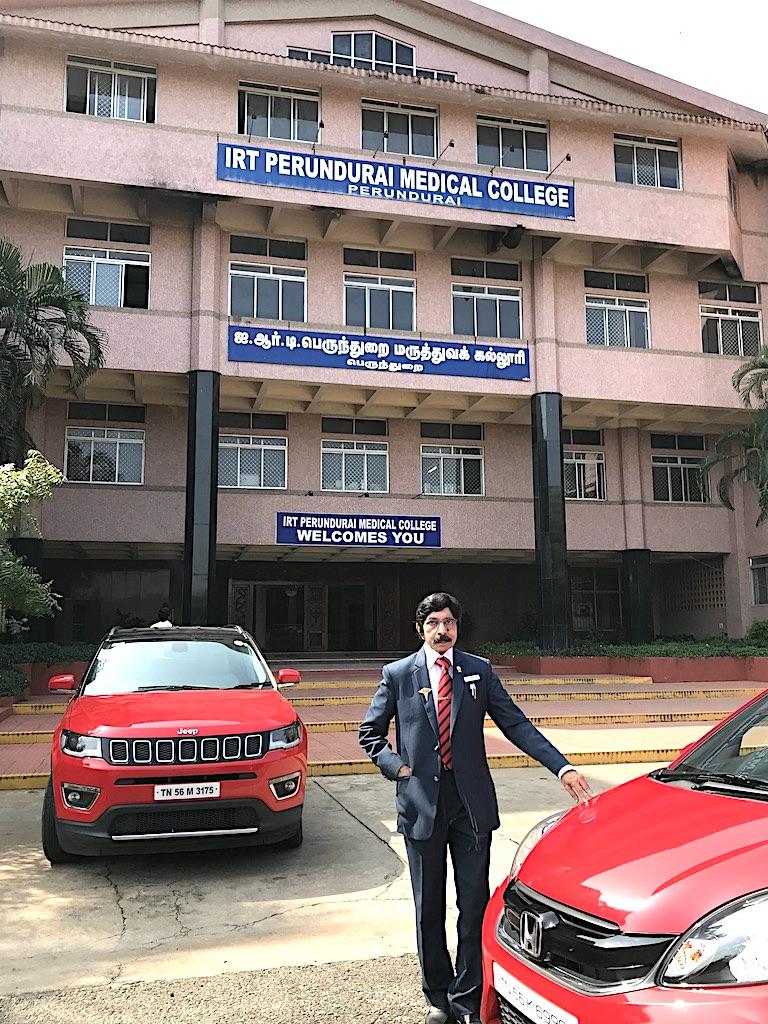
§ PERUNDURAI MEDICAL COLLEGE & SANATORIUM campus
§ RAJYALAKSHMI RAMAPRASAD and PLANTS
§ GIRL CHILD : GOLDEN CHILD ; WOMEN POWER
§ ALLERGY, ASTHMA, COPD and ILD
§ RAPE
§ MARKETING TRICKS & INNOVATIONS
§ MODERN MEDICINE -- the Good, the Bad and th...
§ RAJYALAKSHMI & International Women's Day 2025 & ...
§ SHIVA, KRISHNA, Ramanuja & Ramanujan
§ OUR LOVE STORY & good old days
o ▼ May (2)
· ▼ 2019 (1)
o ▼ January (1)
· ▼ 2020 (3)
o ▼ February (1)
o ▼ April (1)
§ RAJYALAKSHMI RAMAPRASAD and RADIOGRAM
o ▼ June (1)
§ CORONAVIRUS COVID-19 (SARS-CoV-2)
· ▼ 2022 (1)
o ▼ October (1)
· ▼ 2023 (25)
o ▼ January (23)
§ FASTING
§ TUBERCULOSIS -- drug-resistant
§ HEART
§ INDIAN IMMUNITY, BCG and COVID
§ WOW !!!
§ COVID vaccines -- Safe or Unsafe ?
§ SNAKES (Reptiles) MYSTERIOUS REPTILES
o ▼ August (1)
§ RAMAYAAN
o ▼ October (1)
An anecdote about “GORU”
During my childhood, one of my schoolmates had huge nails. Her name was Gowri. We nicknamed her as ‘Goru’ (‘goru’ in Telugu means nail of a finger or toe ). They used to say that her huge nails caused a problem in her heart. It might be a case of ‘Digital Clubbing’ (abnormal nails present in some ‘Congenital Heart Diseases’). After one summer vacation, ‘Goru’ didn’t come back to the school. It was learnt that she died due to the nail / heart problem, and that treatment could not be availed as they didn’t have money to pay for it.
Perhaps, this incident prompted me to look at everyone’s nails from that time which might have led me to report the first case from India of ‘Yellow Nail Syndrome (YNS)’ in 1980 (published in an American journal, CHEST) and the first case in the world of ‘Yellow nails & Covid’ in 2023, published in an Indian journal, THE ANTISEPTIC - https://drtramaprasad.blogspot.com/2017/04/yellow-nail syndrome_28.html
And perhaps, the preventable death of ‘Goru’ due to the inability to pay for the treatment motivated me to start my ‘PAY WHAT YOU CAN’ Clinic half-a-century ago where patients may pay whatever they can. No fixed fee ( http://drtramaprasad.blogspot.com/2017/06/pay-what-you-can-clinic.html ). The credit for these case reports on YNS and the starting of my ‘Pay What You Can’ Clinic should go to ‘Goru’. Thanks to “Goru”.
-- T. Rama Prasad

This is not an ad, it’s about an odd service.
Dr. T. Rama Prasad’s ‘PAY WHAT YOU CAN’ Clinic
“Thena thyakthena bhoojithaha”– Ishopanishad
( Translated by Prof. B.M. Hegde as: “Rejoice in giving.”)
True to this quote, I have been rejoicing at what little I could give. Defying stereotypes, this clinic has been in existence for a very long time, sans glitz, blitz, ads, microphones, speeches and noise. As a matter of my policy, publicity is shunned. The reason is simple. Good work needs no noise and nonsense. My ‘SCRIBBLINGS’ on related topics may be accessed at: http://drtramaprasad.blogspot.com

Yes, ‘PAY WHAT YOU CAN & WISH’, as the consultation fee. It is the patient’s choice. It may even be zero. The patient may pay (donate) any amount. The money may just be put into the ‘hundi’ box, or remitted through the ‘Google Pay/UPI’ QR code. And the money thus received is used for charity to help the needy, the poor, and the less fortunate. If interested to know more about this facility, go to: http://drtramaprasad.blogspot.com/2017/06/pay-what-you-can-clinic.html . And, even if you are not a patient, if you wish, you may also 'contribute whatever you can' in the same way.
"We need not run after money. If we are meritorious and compassionate, money would run after us, and it eludes us if we run after it.” -- T. Rama Prasad
“Richness is not having lots of money. It is the feeling that one has enough of it. Contentment sans comparison is what makes one really rich.” -- T. Rama Prasad.
Facebook: T Rama Prasad Twitter: @DrRamaprasadt Telegram : Dr T Rama Prasad


Consult your local doctor before rushing to me.
Most ailments can be cured at local level.
For APPOINTMENT with Dr. T. Rama Prasad, contact : 98427 20393
To know a little about the TB sanatorium & the Perundurai Medical College, click on https://drtramaprasad.blogspot.com/2017/04/perundurai-medical-college-sanatorium_29.html

Left to right:
Dr. T. Rama Prasad, Former Medical Superintendent (Special) of RT Sanatorium & Perundurai Medical College, (2) Dr. S. Prabhakar, Erode District Collector, (3) Thiru Thoppu N.D. Venkatachalam, Ex Minister & Perundurai MLA, (4) Dr. S. Geethalakshmi, Vice-Chancellor of the Tamil Nadu Dr. MGR Medical University, (5) Prof. Dr. M. Rajendran, Dean of the IRT Perundurai Medical College, (6) Thiru V. Shanmugan, Chairman of The Nandha Educational Trust.
From a BLOG ARTICLE in : http://drtramaprasad.blogspot.com


The first outbreak of COVID in the world was reported in China on the very next day (31.12.2019) of taking the above photo on 30.12.2019 !!!
This sanatorium (Ramalingam Tuberculosis Sanatorium) was a premier institution in India with 350 beds for TB patients (charge-free & chargeable luxury cottages, spread over a sprawling vegetation-rich-pollution-free-326-acre-hinterland, with selubrious climate, where the in-patients used to stay for months). Later, a medical college (Perundurai Medical College) was established in the sanatorium campus, around the year 2000. With the introduction of domiciliary (home) TB treatment & the establishment of the medical college in the campus, the sanatorium gradually faded away, after I retired from the post there.
At the END of the YEAR (25-12-2025), the Indian Council of Medical Research – National Institute for Research in Tuberculosis (ICMR – NIRT) and Women’s Collective Forum, in their new report released on 25.12.2025, recommended making TB-related content mandatory in UG & PG medical courses and urged active participation of medical colleges in the National TB Elimination Programme (NTEP). They have also recommended creation of dedicated beds at various levels of medical care, citing that 26.81 lakh TB cases were diagnosed in India in 2024 .

Hallelujah ! 2026 sans TB ! No ?


No comments:
Post a Comment